

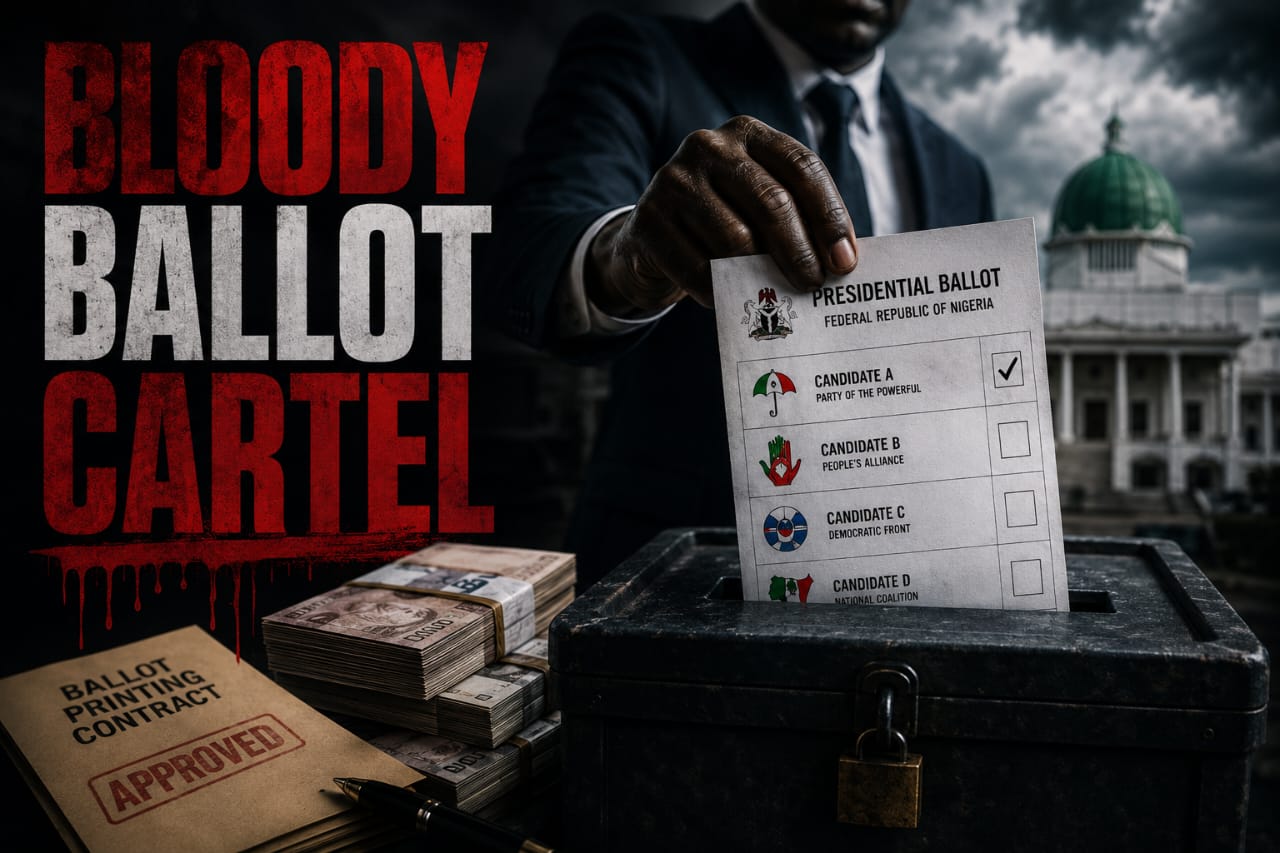
As conversations around Nigeria’s 2027 general elections begin to intensify, a controversial investigative publication circulating online is raising fresh concerns about transparency in the printing of sensitive election materials.
The report, titled “The Bloody Ballot: Political Cartel,” alleges that politically connected interests may be positioning themselves to influence ballot paper printing contracts ahead of the next presidential election.
Although the allegations have not been independently verified by any court or official regulatory body, the publication has triggered growing public debate over one critical issue: who should control the production of Nigeria’s ballot papers?
Election analysts have long described ballot printing as one of the most sensitive stages of any democratic process. For years, Nigeria relied partly on foreign firms to handle aspects of electoral printing, a move many believed reduced the risk of political interference.
In recent election cycles, however, there has been a gradual shift toward local production of election materials. Supporters say the policy supports Nigerian businesses, saves foreign exchange, and strengthens local technical capacity.
Critics argue that without strict oversight, localising ballot production could expose the process to political influence and weaken public trust in elections.
According to the publication, concerns being raised include alleged lack of transparency in procurement procedures, questions surrounding the political affiliations of certain printing firms, and claims that some contractors may lack prior experience in secure electoral printing.
The report also calls for closer scrutiny from civil society groups, journalists, and oversight agencies as preparations for the 2027 elections begin to take shape.
While the claims remain allegations, governance advocates say the broader issue goes beyond politics and speaks directly to public confidence in Nigeria’s democratic process.
Analysts note that trust in elections depends not only on voting day itself, but also on every stage leading up to it — including procurement, printing, storage, distribution, and result management.
The publication is also renewing calls for more transparent procurement systems, independent monitoring of election material production, and full disclosure of companies handling sensitive electoral contracts.
As political activities gradually build toward 2027, observers say Nigerians may increasingly focus not just on candidates and campaigns, but on the integrity of the systems operating behind the scenes.
Source: Nairaland Discussion Thread