

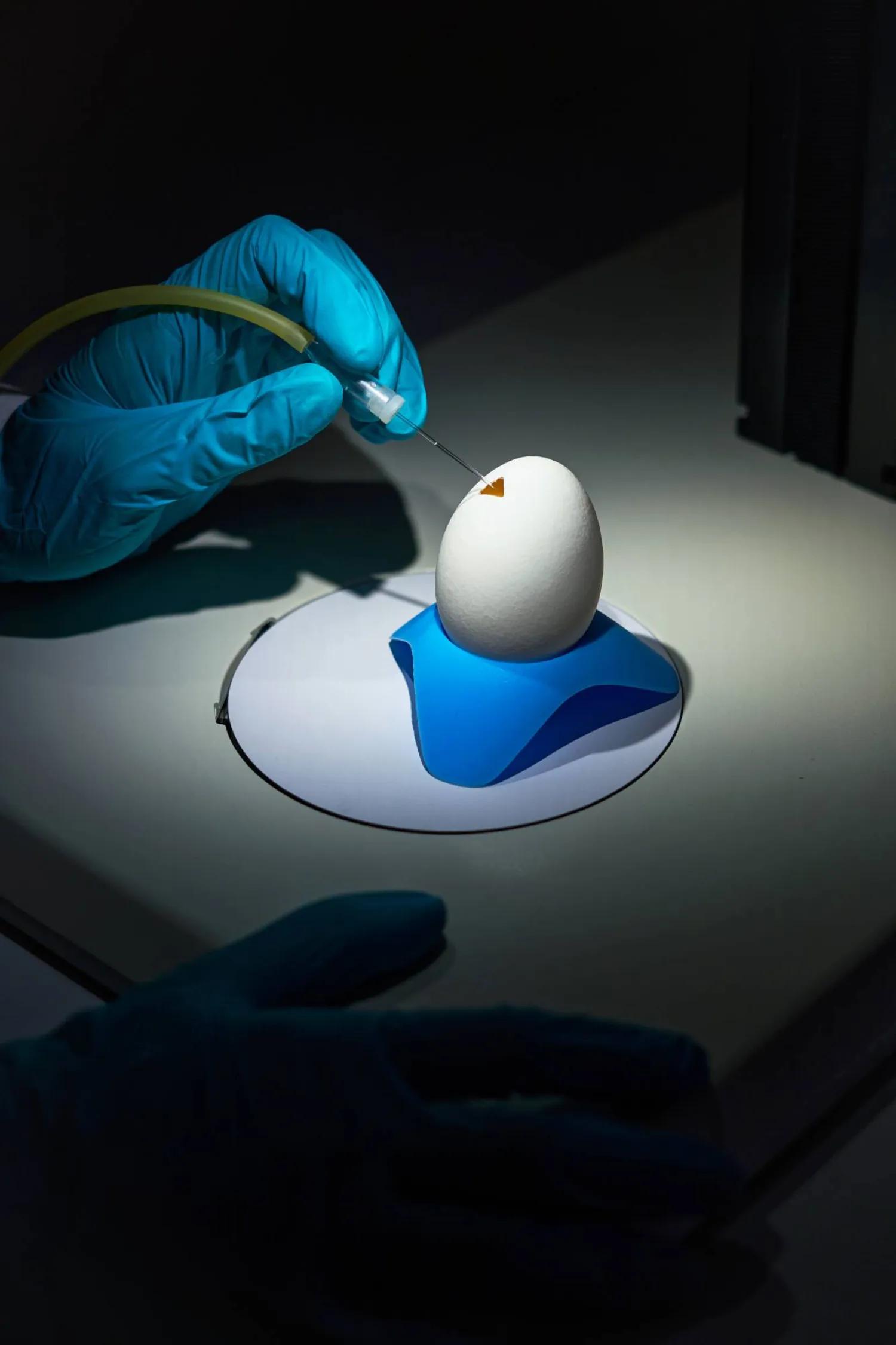
A biotechnology company in the United States has announced what many scientists are calling a groundbreaking step in futuristic genetic engineering after successfully hatching chicks from completely artificial eggs.
Dallas-based Colossal Biosciences revealed that it created a 3D-printed artificial egg capable of supporting the development of bird embryos until hatching.
The company, which is widely known for its ambitious “de-extinction” projects, claims the technology could one day help revive extinct bird species and protect endangered animals from disappearing forever.
According to reports, the artificial egg resembles a simple plastic container, but its real innovation lies in a specially designed silicone membrane that mimics the natural function of a real eggshell.
Researchers explained that the membrane allows oxygen to pass through naturally, creating the conditions necessary for embryos to survive and grow.
To test the technology, scientists reportedly transferred the contents of real chicken eggs into the artificial structure and monitored the development process through a small viewing window built into the design.
The experiment eventually resulted in healthy chicks successfully hatching from the synthetic eggs.
Colossal Biosciences has previously attracted international attention for its controversial plans to revive extinct species, including the South Island giant moa — a massive bird native to New Zealand that disappeared centuries ago.
The company reportedly believes the artificial egg system could play a key role in future attempts to incubate genetically engineered embryos of extinct birds.
However, experts note that bringing back extinct species remains extremely difficult and would require complex DNA reconstruction and genetic editing technologies that are still being developed.
Scientists would first need to recover and study ancient genetic material before making thousands of modifications to the DNA of living bird species.
Despite the challenges, many researchers consider the artificial egg breakthrough an important advancement in bioengineering and reproductive science.
Some experts also pointed out that previous attempts by other scientists to hatch birds from artificial eggs often required external oxygen systems, which sometimes caused deformities or unsuccessful hatching.
According to reports, Colossal’s membrane design may solve that problem by allowing oxygen to move naturally, similar to a real egg.
The development has sparked mixed reactions online, with some people praising the innovation as revolutionary, while others raised ethical concerns about de-extinction science and genetic experimentation.