

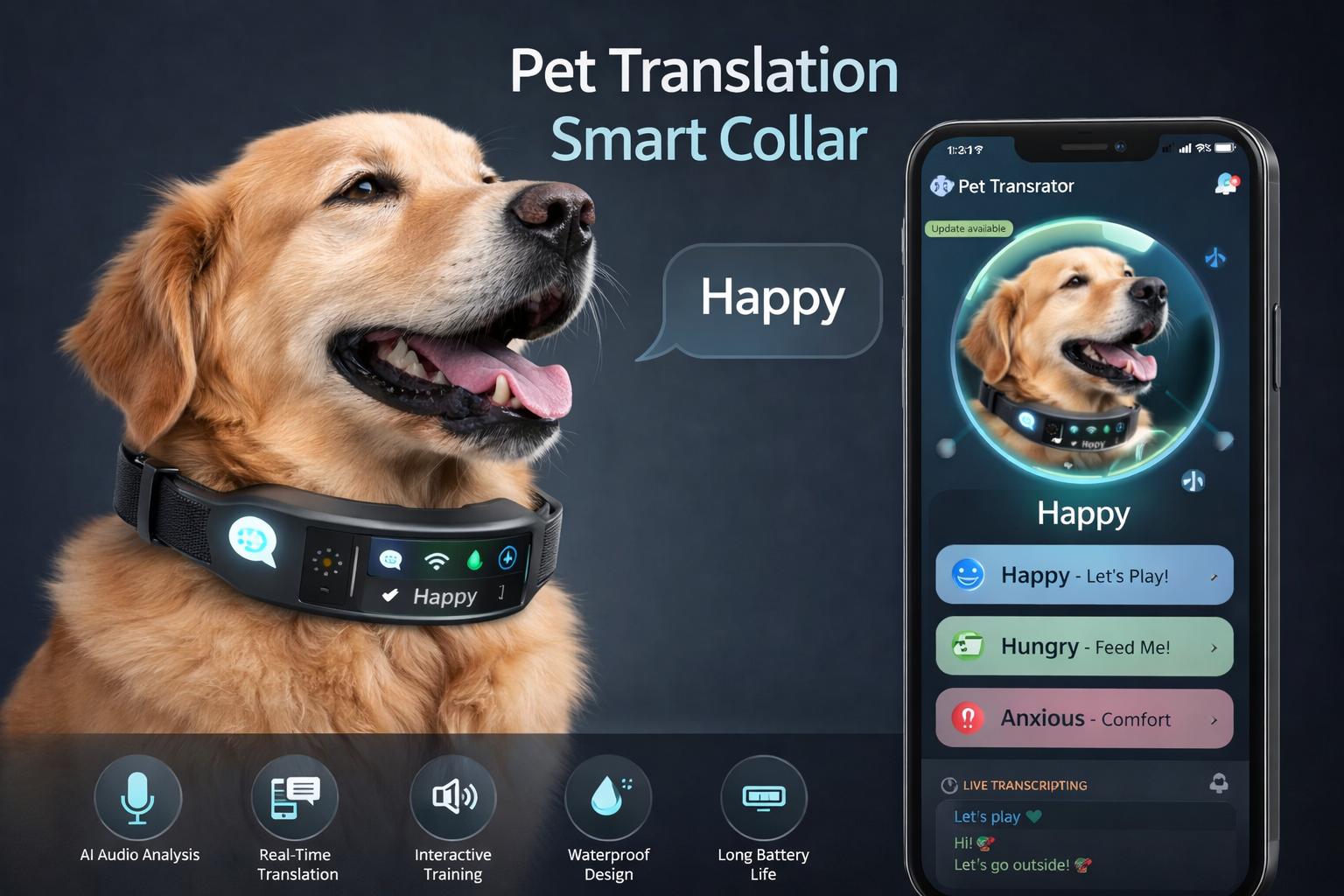
A Chinese technology startup has stirred massive debate online after unveiling what it describes as an advanced AI-powered pet translator capable of understanding cats and dogs with nearly 95% accuracy.
The company, Meng Xiaoyi, recently launched preorders for the wearable device, which it claims can analyze animal sounds, emotions and behavior patterns in real time.
According to the startup, the gadget is designed to be worn around a pet’s neck and uses artificial intelligence to “translate” barks, meows and other animal vocalizations into human language.
The company reportedly said the translator can identify pet emotions and communication signals with an accuracy level approaching 95%.
The announcement quickly attracted attention across Chinese social media, with thousands of pet owners reportedly rushing to reserve the product.
Reports indicate that more than 10,000 units have already been preordered despite skepticism surrounding the company’s claims.
The AI translator is said to cost about 799 yuan, which is approximately $118.
According to Meng Xiaoyi, the device was built using Alibaba Cloud’s Tongyi Qianwen AI model technology and trained using millions of pet voice samples and behavioral data points.
The startup claims this large database enables the system to recognize different emotional states and communication patterns in animals.
However, critics have questioned the credibility of the company’s bold promises.
Many social media users pointed out that Meng Xiaoyi has not released any independent scientific studies, testing results or verifiable data proving the device’s reported 95% accuracy rate.
Some online commenters even mocked the product, describing it as more of a “human intelligence test” than a genuine pet translation tool.
Skepticism reportedly increased further after Chinese media revealed that the company was only founded earlier this year.
Despite the controversy, the startup has already secured about $1 million in seed funding, suggesting that investors see potential in the growing AI pet technology market.
The debate surrounding the product has reignited wider discussions about how far artificial intelligence can realistically go in understanding animal communication.
While some people believe the technology could revolutionize human-pet relationships, others argue that accurately translating animal emotions and thoughts remains scientifically uncertain.