

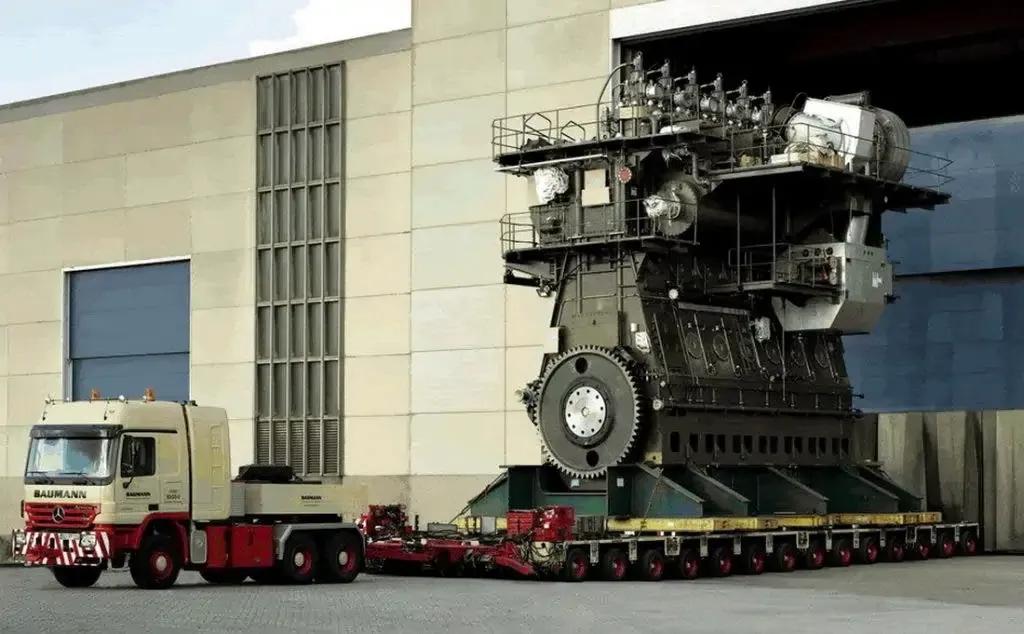
The largest combustion engine ever built is so enormous that it towers over buildings, weighs thousands of tons and consumes fuel on a scale difficult to imagine.
Known as the Wärtsilä-Sulzer RTA96-C, the gigantic engine was designed specifically to power some of the world’s biggest container ships.
Built by Finnish engineering company Wärtsilä, the massive two-stroke turbocharged diesel engine measures about 13 meters high and 26 meters long.
The machine reportedly weighs an astonishing 2,300 tons, making it one of the heaviest and most powerful mechanical systems ever created.
The engine contains 14 giant cylinders, each equipped with enormous pistons weighing around five tons each.
Its crankshaft alone reportedly weighs approximately 300 tons.
Despite operating at a relatively low speed of just over 100 revolutions per minute, the engine generates incredible power output capable of moving giant cargo vessels across oceans.
Reports indicate the RTA96-C can produce over 108,000 brake horsepower, enough energy to propel some of the largest ships ever built.
However, that power comes with extraordinary fuel consumption.
According to engineering data, the engine burns nearly 250 tons of heavy fuel oil every single day while operating at full capacity.
Even under efficient operating conditions, it still reportedly consumes thousands of gallons of fuel every hour.
The massive engine was developed after shipping companies began constructing increasingly larger container ships that required more powerful propulsion systems.
Engineers reportedly expanded an earlier 12-cylinder design by adding additional cylinders to achieve the required performance.
This process required major structural upgrades to ensure the engine could safely withstand the enormous forces generated during operation.
The first commercial 14-cylinder RTA96-C entered service in 2006 aboard the Emma Maersk, which was considered the world’s largest container ship at the time.
Experts say building one of these giant engines is an extremely expensive and technically demanding process.
Reports suggest each unit can cost more than $25 million to manufacture.
The unbelievable scale of the machine has fascinated people worldwide, with many describing it as one of the greatest engineering achievements in modern maritime history.