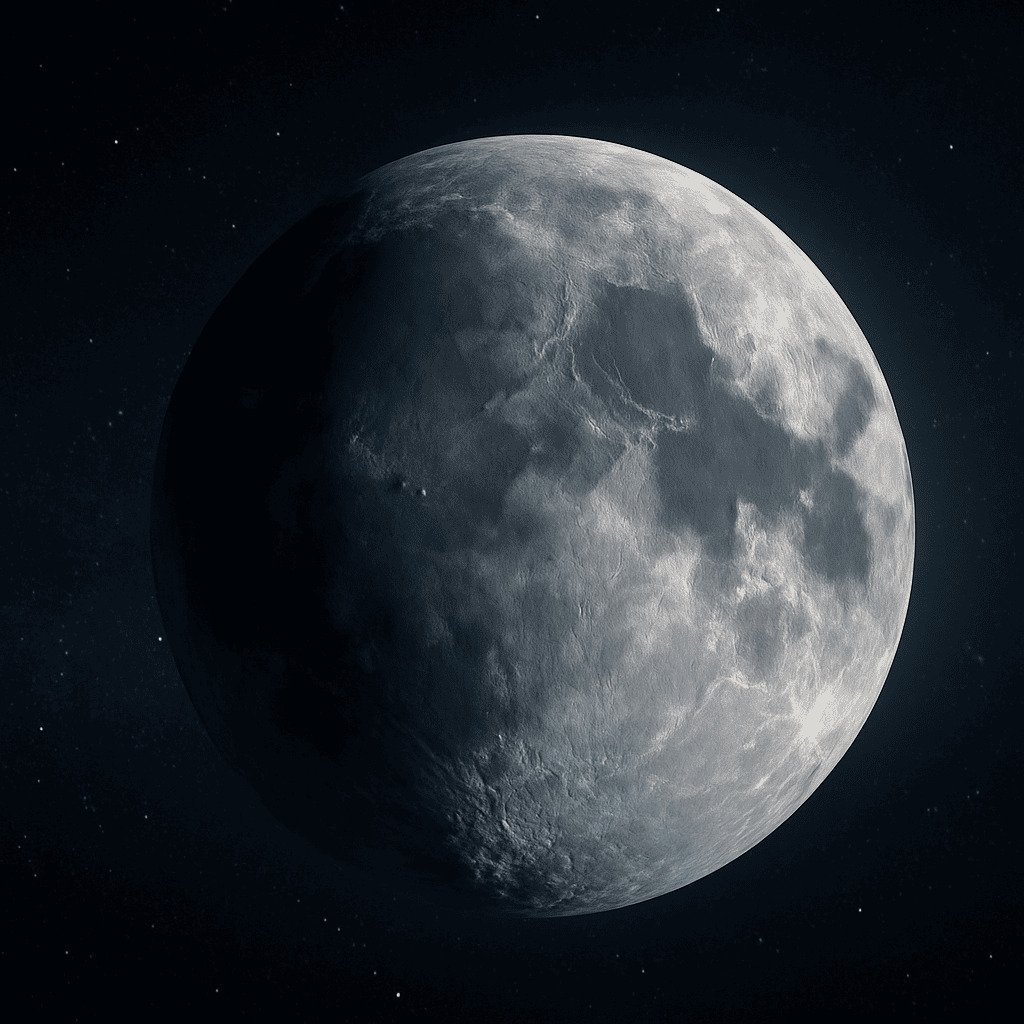

NASA Confirms Water on the Moon’s South Pole, Plans Crewed Mission by 2028
Lorem ipsum dolor sit amet, consectetur adipiscing mollis dolor facilisis porttitor.
Read More NASA Confirms Water on the Moon’s South Pole, Plans Crewed Mission by 2028
Lorem ipsum dolor sit amet, consectetur adipiscing mollis dolor facilisis porttitor.
Read More NASA Confirms Water on the Moon’s South Pole, Plans Crewed Mission by 2028
Lorem ipsum dolor sit amet, consectetur adipiscing mollis dolor facilisis porttitor.
Read More Apple Unveils iPhone 17 with Groundbreaking AI Features and Battery Life
Lorem ipsum dolor sit amet, consectetur adipiscing mollis dolor facilisis porttitor.
Read More AI-Powered Healthcare: Revolutionizing Patient Care
Lorem ipsum dolor sit amet, consectetur adipiscing mollis dolor facilisis porttitor.
Lorem ipsum dolor sit amet, consectetur adipiscing mollis dolor facilisis porttitor.
For centuries, shadowy figures known as the Dark Watchers have been spotted standing silently along the ridgelines of California’s Santa Lucia Mountains. Described as towering silhouettes wearing wide-brimmed hats or cloaks, these mysterious entities have inspired a mix of folklore, fear, and fascination. But are they ancient guardians watching over travelers—or mere optical illusions born from the mist?
The Dark Watchers, or Los Vigilantes Oscuros, are part of California folklore, often appearing at dawn or dusk as immobile figures gazing down from mountain peaks. Eyewitnesses describe them as seven-foot-tall beings, sometimes holding staffs, with no visible facial features. Despite their eerie presence, they are not known to interact, harm, or speak—only to watch silently and vanish if approached.
Long before Spanish settlers arrived, the Chumash and Salinan peoples had spiritual traditions involving guardian spirits tied to nature. When Spanish missionaries and explorers encountered strange silhouettes in the mist, they gave them the name Dark Watchers, adding a layer of European mystique to an already ancient belief. As time passed, these figures evolved into symbols of California’s cultural and supernatural heritage.
The legend gained national attention when John Steinbeck mentioned the Dark Watchers in his 1938 short story Flight, inspired by his upbringing near the Santa Lucia range. His friend, poet Robinson Jeffers, also referenced them in his poetry. These literary nods helped transform local legend into lasting lore, fueling curiosity among readers and paranormal enthusiasts alike.
While the idea of mountain guardians is intriguing, many experts argue that sightings of the Dark Watchers can be explained by science and psychology. One leading theory involves the Fata Morgana mirage—a rare atmospheric condition that distorts distant objects and makes them appear larger or more humanoid in shape. Combined with pareidolia (our brain’s tendency to see faces or forms in random shapes), it’s possible that foggy light conditions at high altitudes lead people to believe they’re seeing sentient beings.
Other explanations point to physical exhaustion, dehydration, and even the effects of hallucinogenic fungi like ergot as potential causes for these visions. These factors, especially when experienced in the remote, rugged terrain of the Santa Lucia Mountains, can easily trick the human mind into believing it’s being watched.
Some cryptozoologists link the Dark Watchers to Bigfoot sightings. But the similarities are thin—Bigfoot is considered a physical creature that leaves tracks, while the Dark Watchers are ghostly and vanish when approached. This distinction places them more in the realm of spirits or phantoms than cryptids.
The continued fascination with the Dark Watchers isn’t just about supernatural curiosity. It speaks to a deeper psychological need: the desire for wonder, mystery, and the feeling of being observed by something greater than ourselves. These shadowy figures reflect humanity’s instinct to seek meaning in the unknown—and in doing so, they bridge the gap between folklore, fear, and faith.
In the digital age, the myth has found new life. People share sightings on Reddit, TikTok, and YouTube, spreading the lore beyond California. Whether seen as spiritual sentinels or hallucinations, the Dark Watchers continue to captivate the imagination.
The Dark Watchers of California represent more than just a ghost story. They symbolize our collective fascination with the unknown, our urge to tell stories about the shadows on the edge of our vision, and the power of landscape to shape human perception and myth.
Whether you believe they are guardians, illusions, or echoes of ancient spirits, one thing is clear—the Santa Lucia Mountains still have secrets, and the Dark Watchers are among the most haunting of them all.
For centuries, mermaids have captivated human imagination—from the mystical sirens of ancient seafaring legends to the romanticized creatures of modern folklore. But beyond the fairy tales and fantasy, could mermaids have roots in ancient religious texts? One intriguing theory links the origin of mermaids to the Book of Enoch, an apocryphal scripture filled with stories of divine rebellion, judgment, and supernatural hybrids.
This post explores the controversial idea that mermaids are the cursed descendants of human women and fallen angels, as described in the Book of Enoch, offering a fascinating blend of theology, mythology, and mystery.
The Book of Enoch is an ancient Jewish text attributed to Enoch, the great-grandfather of Noah. Though not included in most modern Bibles, it holds a revered place in Ethiopian Orthodox Christianity and has long fascinated scholars of religious mysticism. It details the fall of a group of angels known as the Watchers who defied divine law, descended to Earth, and took human wives.
These forbidden unions birthed the Nephilim—violent giants whose existence corrupted the Earth. But lesser-known among these tales is the punishment of the human women involved, who, according to some interpretations, were cursed and transformed into half-human, half-fish beings—what we might now call mermaids.
According to the Book of Enoch, the Watchers not only committed divine treason by marrying human women—they also introduced forbidden knowledge. This included the use of enchantments, weapon-making, astrology, and beautification rituals. These teachings blurred the line between the celestial and terrestrial realms.
The resulting offspring, the Nephilim, were monstrous and insatiable, eventually turning on humankind. The Earth fell into chaos and bloodshed, prompting God to cleanse the world through the Great Flood. However, the punishment extended beyond the Nephilim—women who consorted with angels faced eternal transformation.
The idea that mermaids were once human women cursed for their involvement with fallen angels stems from an interpretation of the “siren curse” described in Enochian myths. These women were said to be transformed—fish from the waist down, human above—as a divine reminder of their transgression.
Banished to the sea, these cursed beings were believed to lure sailors to their doom with haunting beauty and songs. Unlike the gentle Disney mermaids of today, these early versions were vengeful, seductive, and tied deeply to sin and divine punishment. Their songs could be heard above crashing waves, steering ships into rocks and collecting the souls of drowned men.
Across ancient coastal communities, tales of mermaids morphed into local legends—many aligning with this darker Enochian origin. Some stories describe mermaids seducing lonely fishermen, dragging them into underwater caves where they remained trapped, fathering half-human offspring. These hybrid children were said to possess weather-controlling powers and a hatred for fully human societies.
Other accounts speak of mermaids luring children with treasures like shells and pearls before dragging them beneath the sea. The cries of these children were believed to echo in the waves, warning others to stay away from the water. Far from being harmless, these mermaids were seen as twisted echoes of divine judgment.
While cultures across the globe—from the Greeks and Norse to Middle Eastern and African societies—share tales of mermaid-like beings, the Enochian perspective frames mermaids within a moral and religious context. This interpretation gives spiritual weight to folklore and reinforces themes of punishment, temptation, and the consequences of defying divine law.
In medieval Europe, churches even used mermaid carvings as symbols of vanity and lust. By the time of the Renaissance and Victorian era, these once-feared figures evolved into tragic romantics, culminating in stories like The Little Mermaid. But the darker view of mermaids as cursed beings endures in paranormal circles and esoteric studies—thanks in part to the Book of Enoch.
In an age where mythology, mysticism, and ancient texts are being reexamined through modern lenses, the theory of mermaids as cursed women from the Book of Enoch resonates with many. It offers a unified narrative that connects global folklore to a biblical framework, weaving together symbols of divine rebellion, forbidden love, and cosmic justice.
For those drawn to ancient mysteries, the supernatural, or alternative biblical interpretations, the Enochian mermaid theory provides more than a fantastical origin story—it serves as a reflection on sin, sorrow, and the blurred line between myth and faith.
Whether seen as symbols of divine wrath or misunderstood creatures of the deep, mermaids continue to stir curiosity and speculation. The Book of Enoch offers one of the most captivating—if controversial—takes on their origin, turning the tale of the mermaid into a cautionary legend about the dangers of defying the divine.
As religious texts and folklore continue to intersect, mermaids remain more than mythical sea maidens. They are echoes of ancient sin, reminders of forbidden unions, and symbols of the human fascination with what lies beyond the surface.
Originally published on Higgypop.com
In May 2018, British physicist Sir Roger Penrose made a bold claim: humans may have souls that live on after death. This contrasted sharply with other scientific statements made around the same time, which asserted that there is no life after death.
Penrose’s theory is rooted in Quantum Field Theory and suggests that consciousness is a form of quantum energy—something that cannot be destroyed and may continue to exist outside the body after death. He proposes that this “quantum consciousness” exists at a subatomic level and is stored in structures called microtubules within the cells of the human body.
According to Penrose, when a person dies, the quantum information in the microtubules is released into the universe. If the person is revived, the information can return to the body—offering a possible explanation for near-death experiences.
This idea expands on the theory that consciousness cannot be fully explained by classical physics. Proponents of quantum consciousness believe phenomena such as quantum entanglement and superposition may be key to understanding how consciousness works.
Penrose argues that there is a uniform field of consciousness throughout the universe, much like there are uniform fields for photons, electrons, and other subatomic particles.
Although many scientists agree that quantum mechanics might play a role in consciousness, the theory remains highly controversial and largely unproven. Experiments proposed to test it have not yet been feasible.
However, Penrose claims to have found evidence that supports the idea of quantum information—or a “soul”—leaving the body.
Dr. Hans-Peter Dürr, former head of the Institute for Physics in Munich, supports this view. He believes our physical universe is only part of reality. According to him, after death, our awareness continues in an infinite reality beyond the physical world, existing in the form of energy. “In this way, I am immortal,” he says.
If these ideas prove correct, they raise fascinating possibilities—such as the potential for future technology to extract human consciousness from dying bodies and sustain awareness indefinitely.
Source: Higgypop Paranormal News — The Science of Life After Death
By SU Williams | Originally published on SpookyIsles.com
SU WILLIAMS explores the spine-tingling Tales from the Necropolis tour through Liverpool’s haunted St James’s Cemetery.
It was the leaves that were wrong. Standing in St James’s Cemetery, only metres away from the UK’s largest cathedral in Liverpool, I watched as two leaves fluttered manically. Every other leaf remained motionless. Still, at least they were Rowan leaves – a tree which folklore tells us protects against witchcraft. I found this strangely reassuring, especially as our small group had just entered a site associated not only with witches, but much, much more.
In a city many people know only for football and the Beatles, we had signed up for Tales from the Necropolis. Described as a “Guided Ghost Walk”, the 90-minute experience offers a veritable feast for connoisseurs of all things strangely off-kilter. Now known as St James’s Mount and Gardens, the site’s rich history provides a fertile ground for a wealth of stories expertly told by our two guides. Dressed in Edwardian attire and holding lanterns, these guides, Miss Llewellyn and Mr Roberts, took our small group on a journey full of paganism, folklore, and the supernatural, all set in a place where almost 60,000 souls were laid to rest.
Our first stop was an impressive sandstone wall, where Anglo-Saxon runes are scattered across the upper rock. These bear witness to the site’s ancient roots, including its links to Jenny Greenteeth, the Lancashire river hag, who drags unwary children into rivers or lakes if they get too close. It is said Jenny was part of an ancient Pagan witch cult that once inhabited the site. Followers of the ancient religion still visit, often drawing runes and leaving offerings, especially by the Chalybeate Spring, described as Liverpool’s only natural spring.
As a former city cemetery, many of the great and the good of old Liverpool have their final resting place here. The impressive memorial of former MP William Huskisson, the first person ever killed by a train, is just one of several sites where our guides have personally experienced paranormal events. I won’t spoil it for you, but what happened was recorded on tape during a professional ghost hunt and I would definitely have been scared witless by it!
However, it was the stories of the common people, especially children, which proved most evocative. Two small words – “Little Grace” – carved into a wall, a heartbreaking act of remembrance by a clairvoyant seeking to lay to rest the spirit of a four-year-old girl buried without stone or ceremony by a rich father ashamed of his illegitimate offspring. And then there are the four ghost children, frequently seen by gravestones listing dozens of children who died in the 19th century in the city’s children’s homes. These innocent victims of circumstance are still remembered today. Toys and little gifts are often left at their final resting places.
I found something very moving in these innocent gestures by the living to remember the dead. However, not everything the living do at this site can be seen as innocent. Some are drawn here by a different, darker calling. We were told how, in the 1960s, several tombs were broken into and Satanic words scrawled across their walls. Tea lights and offerings often appear on a memorial stone bearing the number 666, which has a reputation for being a portal to the underworld. And then there’s the grave of the so-called Everton Vampire, which has recently been attracting the attention of a regular visitor, evidenced by the trampling down of the wild garlic planted all around the grave by superstitious groundsmen. We were all very relieved to move on from that very creepy spot!
There can be few better places for a ghost tour than a former cemetery and Tales from the Necropolis was a truly fascinating, eerie, and enjoyable experience. Rest assured, there are many more details and tales to enjoy during the tour than those briefly included here, so whatever your particular shade of spooky, there is something here for you. This tour comes highly recommended because even though I did not see a ghost (despite endlessly scanning my photos afterwards!) I certainly remain haunted by what is a truly extraordinary and otherworldly place.
Credit: Phantoms and Monsters
A teenage camper recently shared a chilling experience during a spelunking trip in Alberta, Canada—a moment that has sparked conversation among cryptid enthusiasts and paranormal communities.
According to the report featured on Phantoms and Monsters (June 1, 2025), the teen was part of a youth camp exploring local cave systems. After veering off the usual trail, the group discovered a narrow, seldom-touched cave. The tight opening was only about one meter wide, and the skinniest of the team—this young explorer—was chosen to go in first.
Crawling through the narrow tunnel with barely enough room to move his arms, the teen made his way roughly three meters into the cave before reaching a sharp left turn. There, at the tunnel’s dead end, he noticed a strange pile of sticks and leaves. Curious, he reached out—only to realize he was holding what appeared to be a human bone.
Just then, an ear-piercing scream erupted from outside the cave, and in the panic to retreat, the teen struck his head, knocking out the headlamp. That’s when things got truly disturbing.
In the pitch-black silence, the teen reported seeing two glowing eyes staring directly into his face—an image seared into his memory. Before he could react, unseen hands grabbed his ankles and yanked him back out of the hole. Both he and the adult leader who assisted in pulling him out refused to speak of what exactly they saw.
While the identity of the glowing-eyed entity remains a mystery, the eerie encounter adds to a growing list of unexplained cave phenomena in remote regions of Canada.
For those interested in cryptids and the paranormal, this firsthand account is a stark reminder that sometimes, it’s not just darkness that lurks beneath the earth’s surface.