

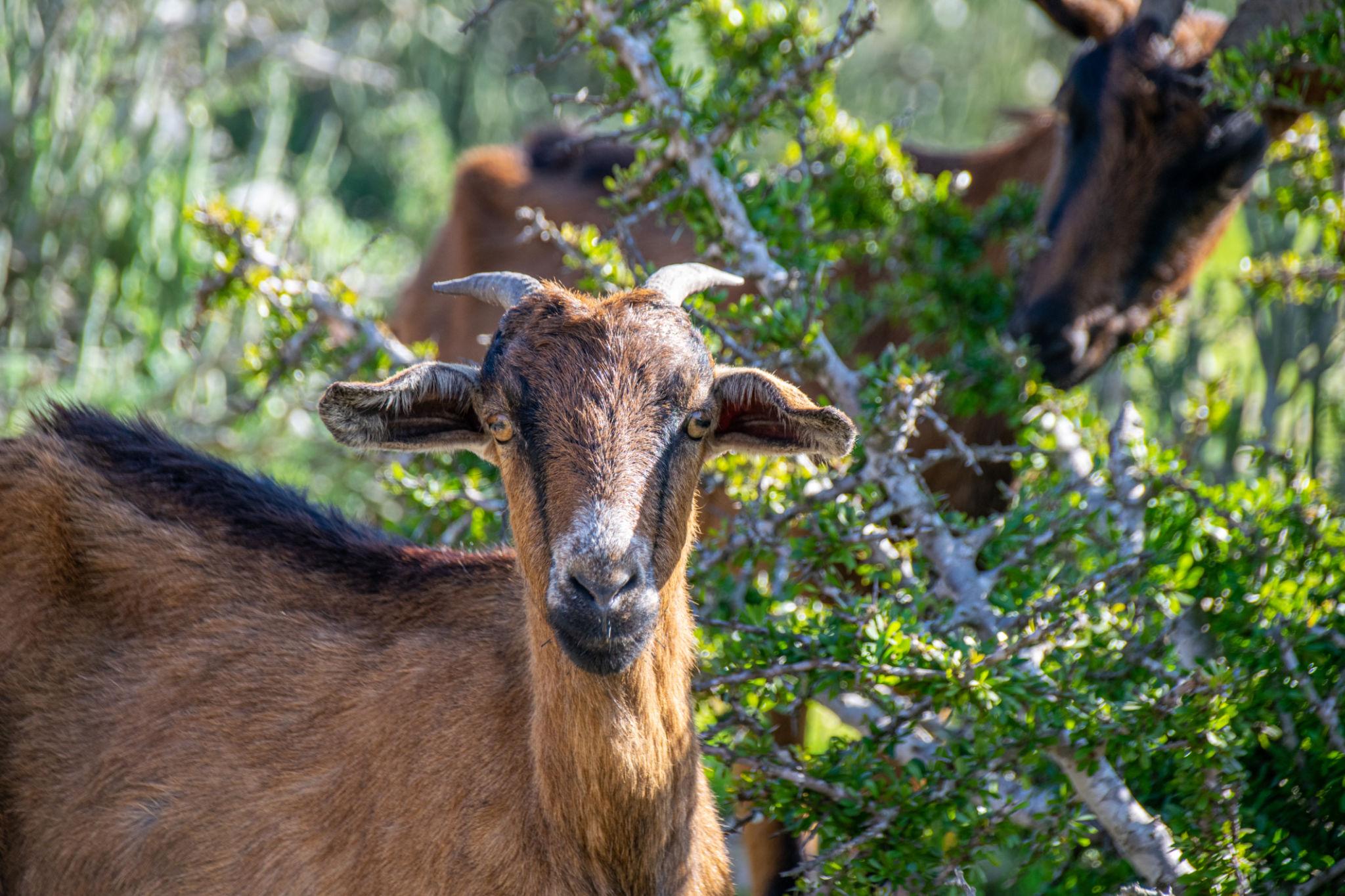
Scientists in Brazil are investigating a mysterious population of goats that managed to survive for over two centuries on a remote island with no known source of fresh water.
The unusual animals lived on Santa Bárbara Island, part of the Abrolhos archipelago located off the coast of northeastern Brazil.
Researchers believe the goats were originally brought to the island centuries ago by colonizers who abandoned livestock after failed settlement attempts.
Despite the harsh conditions on the isolated volcanic island, the goats not only survived but multiplied successfully for generations.
According to reports, historical records show the animals had lived there for more than 250 years — a shocking discovery considering the island reportedly lacks rivers, lakes or other reliable fresh water sources.
6
Last month, Brazil’s Chico Mendes Institute for Biodiversity Conservation (ICMBio) removed the final 27 goats from the island after conservationists concluded that the growing herd was damaging the local ecosystem.
Officials said the goats threatened native plant species and disrupted the breeding habitats of several seabird species living in the region.
However, instead of eliminating the animals entirely, scientists decided to preserve them for further study because of their extraordinary ability to survive under extreme conditions.
Researchers admitted that throughout years of observing the goats, they never actually witnessed the animals drinking water.
This has left experts puzzled and searching for explanations.
Some scientists believe the goats may have gradually adapted to consuming seawater over generations, while others suspect they survived by feeding on water-rich vegetation found on the island.
One plant frequently mentioned by researchers is beldroega, a species known for storing large amounts of moisture.
What surprised researchers even more was that the goats appeared healthy and well-fed despite the harsh environment.
Reports indicated that twin births among the animals were common — a strong sign that the herd was thriving rather than merely surviving.
Environmental experts now hope that studying the goats could help scientists better understand genetic resilience and adaptation to drought conditions.
Researchers believe the findings may eventually contribute to the development of livestock breeds capable of surviving climate change and extreme drought in arid regions.
The bizarre case has since attracted global attention online, with many people calling the animals “miracle goats” and comparing their survival abilities to something out of a science fiction movie.